FREE
Invisalign®
Consultation
Consultation
April 1, 2026
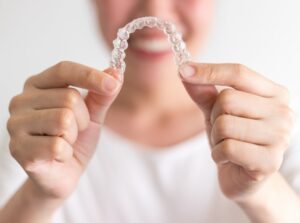
If you grind or clench your teeth—also known as bruxism—you may be wondering whether Invisalign is still an option for straightening your smile. The good news is that in many cases, the answer is yes. However, there are a few important factors to consider before starting treatment.
Bruxism can place excessive pressure on your teeth, leading to wear, chips, cracks, and even jaw discomfort over time. It can also contribute to bite problems, which may be one of the reasons you’re considering Invisalign in the first place.
Because grinding often happens at night, many people aren’t even aware they have the habit until symptoms appear.
Invisalign uses a series of clear, custom-made aligners to gradually shift your teeth into proper alignment. For patients with mild to moderate grinding, Invisalign is often still a viable option.
In fact, the aligners themselves can act as a protective barrier between your upper and lower teeth, similar to a nightguard. This can help reduce the direct impact of grinding and protect your teeth from further wear during treatment.
While Invisalign can work for patients with bruxism, your dentist will need to evaluate the severity of your grinding habit. Heavy or aggressive grinding may put extra stress on the aligners, potentially causing them to wear down or crack more quickly.
In such cases, your dentist may recommend additional protection, such as wearing a separate nightguard or adjusting your treatment plan.
It’s also important to address the underlying cause of your grinding. Bruxism can be linked to stress, sleep disorders, or bite misalignment.
In some cases, improving your bite with Invisalign may actually reduce grinding over time. However, if stress or other factors are contributing, additional strategies—such as stress management or lifestyle changes—may be recommended.
If you move forward with Invisalign, it’s essential to follow your dentist’s instructions carefully. Wearing your aligners for the recommended 20–22 hours per day and monitoring them for signs of wear will help ensure successful results.
Regular checkups will also allow your dentist to track your progress and make any necessary adjustments.
Every patient is different, and the success of Invisalign with bruxism depends on your specific situation. A thorough evaluation will help determine the best course of action.
Having bruxism doesn’t automatically disqualify you from Invisalign. With proper planning and care, many patients can achieve a straighter smile while protecting their teeth from grinding-related damage. By working closely with your dentist, you can find a solution that improves both your alignment and your overall oral health.
Dr. Yana Nemtseva earned her Doctor of Dental Surgery (DDS) degree at the New York University College of Dentistry. She then completed an American Dental Association-accredited hospital-based General Practice Residency Program at Woodhull Medical and Mental Center in New York City, where she did advanced work in endodontics, oral surgery, prosthodontics, pediatric dentistry, periodontics, and implant dentistry. Since then, Dr. Nemtseva has completed several continuing education courses on clear aligners, no-prep veneers, occlusal disease management, and adhesive dentistry. Interested in Invisalign treatment? Book online or call our Morganville office at (732) 972-6400.